
NECK CURVE CORRECTION IN REVESBY & BANKSTOWN
Neck pain, headaches and posture: fixing the cause with neck curve correction
Most people come to see us for a sore neck or headaches. Very often, when we look at their neck X-ray, the healthy curve in the neck has flattened, straightened or even started to reverse. At Touchpoint Chiropractic we don't just ease the pain. We measure the curve of your neck and work to restore it, so the results are more likely to last.
What is the neck curve?
Seen from the side, a healthy neck isn't straight. It has a gentle forward curve, called a lordosis, shaped a bit like a "C" opening towards the back of your neck. That curve matters:
It works like a spring. A curved neck absorbs load and spreads it evenly. A straight neck takes load like a column, which puts more stress on the front of the bones and discs.
It keeps your head balanced over your body. Your head weighs about the same as a bowling ball. When the curve is lost, the head usually drifts forward, and the muscles at the back of your neck have to work overtime to hold it up.
It looks after your nerves. Your spinal cord runs through the neck, and the joints and small muscles there are packed with sensors that tell your brain where your head is.
How do people lose their neck curve?
Usually slowly, over years, and often without any pain at first. Common reasons we see:
Hours looking down at phones, laptops and desks
Car accidents, falls and sports injuries such as whiplash
Weak deep neck muscles, with the bigger muscles taking over
Joints in the neck that have stopped moving properly
Mouth breathing, jaw clenching and poor sleeping positions
Once the head drifts forward, the muscles at the back of the neck tighten, the ligaments at the front shorten, and your brain gets used to the new position as "normal". That's why posture advice on its own rarely fixes it.
Forward head posture, "tech neck" and the neck hump
Most people don't come in asking about their neck curve. They come in because of neck pain, headaches, poor posture, a head that pokes forward, or a hump at the base of the neck. These are often signs of the same problem underneath: the neck curve has flattened and the head has drifted forward of the shoulders. When that happens, the muscles at the back of the neck and upper back work overtime, and some people notice a rounded hump where the neck meets the upper back.
Posture exercises and reminders to "sit up straight" can help, but they rarely change the structure on their own. Correcting the neck curve works on the cause, so good posture becomes easier to hold.
Why does it matter?
A reduced or reversed neck curve is linked to:
Neck pain and stiffness
Headaches, especially tension-type and neck-related headaches
Tight shoulders and upper back
Arm pain or pins and needles from irritated nerves
Poorer balance and sense of where your head is
Feeling tired from muscles working harder than they should
"Linked to" is important. Not everyone with a straight neck has pain, and not every headache comes from the neck. That's why we always assess first.
Why correct the curve instead of just treating the pain?
Pain is usually the last thing to show up and the first thing to go. If the structure underneath hasn't changed, the problem tends to come back. In research trials comparing pain-relief care with curve-correction care, both groups often felt better at first, but the people whose curve was improved were more likely to stay better over the long term.
Think of braces on teeth. Your teeth stop hurting long before they're straight, and if the braces come off too early, they move back. The neck works the same way.
How we check your neck curve
A detailed history and examination, including how each joint in your neck moves
Posture photos, to see where your head sits over your body
An sEMG nerve scan, which shows how hard the muscles along your spine are working
Neck X-rays, so we can measure the curve. We never adjust a neck before seeing X-rays
At your second visit, Dr Charles shows you your X-rays, explains what we found and talks you through your options. As he puts it: "My job is to tell you what's going on, so you can decide what you want to do about it. Do you just want to treat the pain, or do you want to address what's causing it for a longer-lasting fix?"
How we correct it
Correction uses three tools together, because each one fixes a different part of the problem:
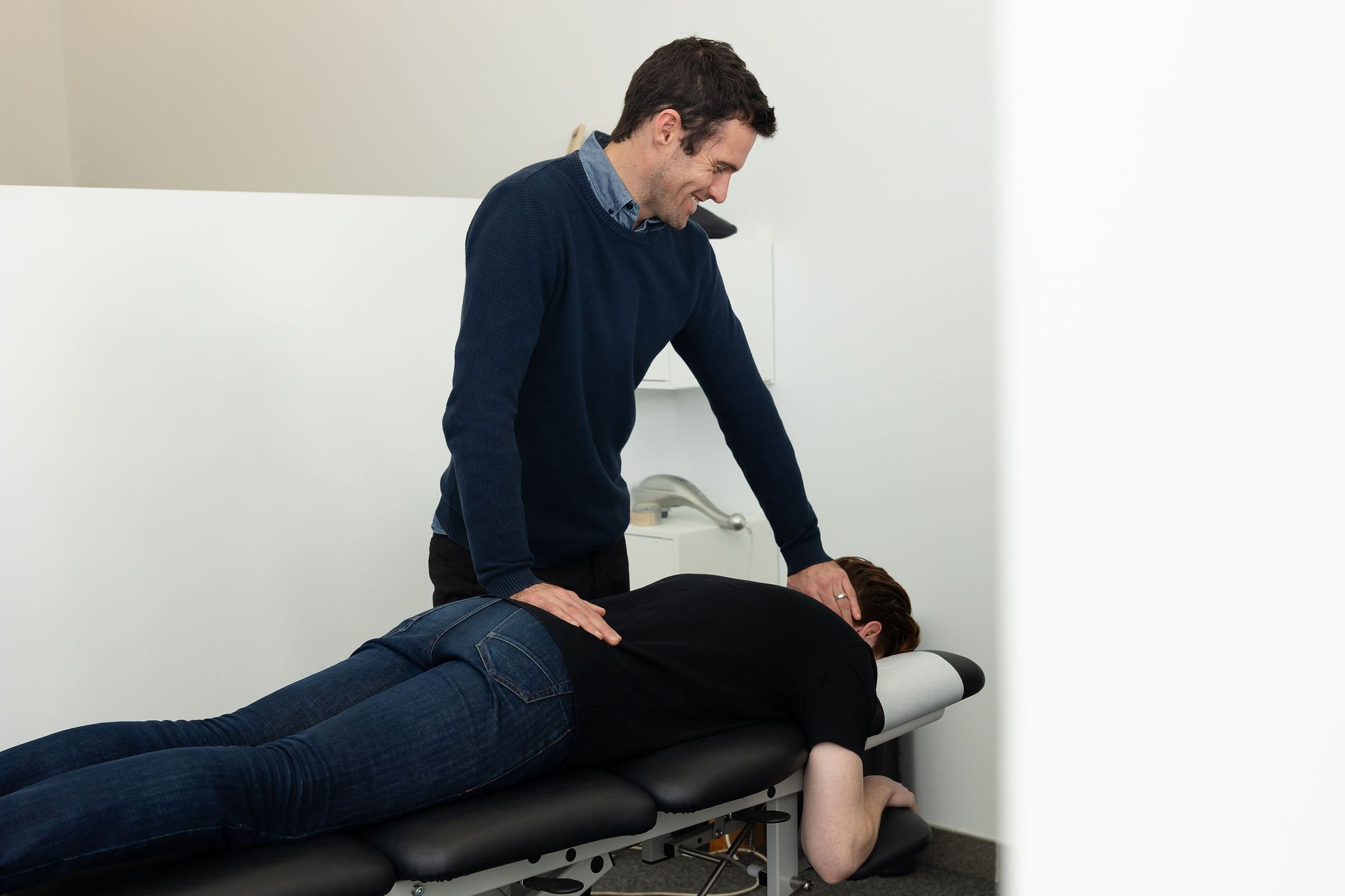
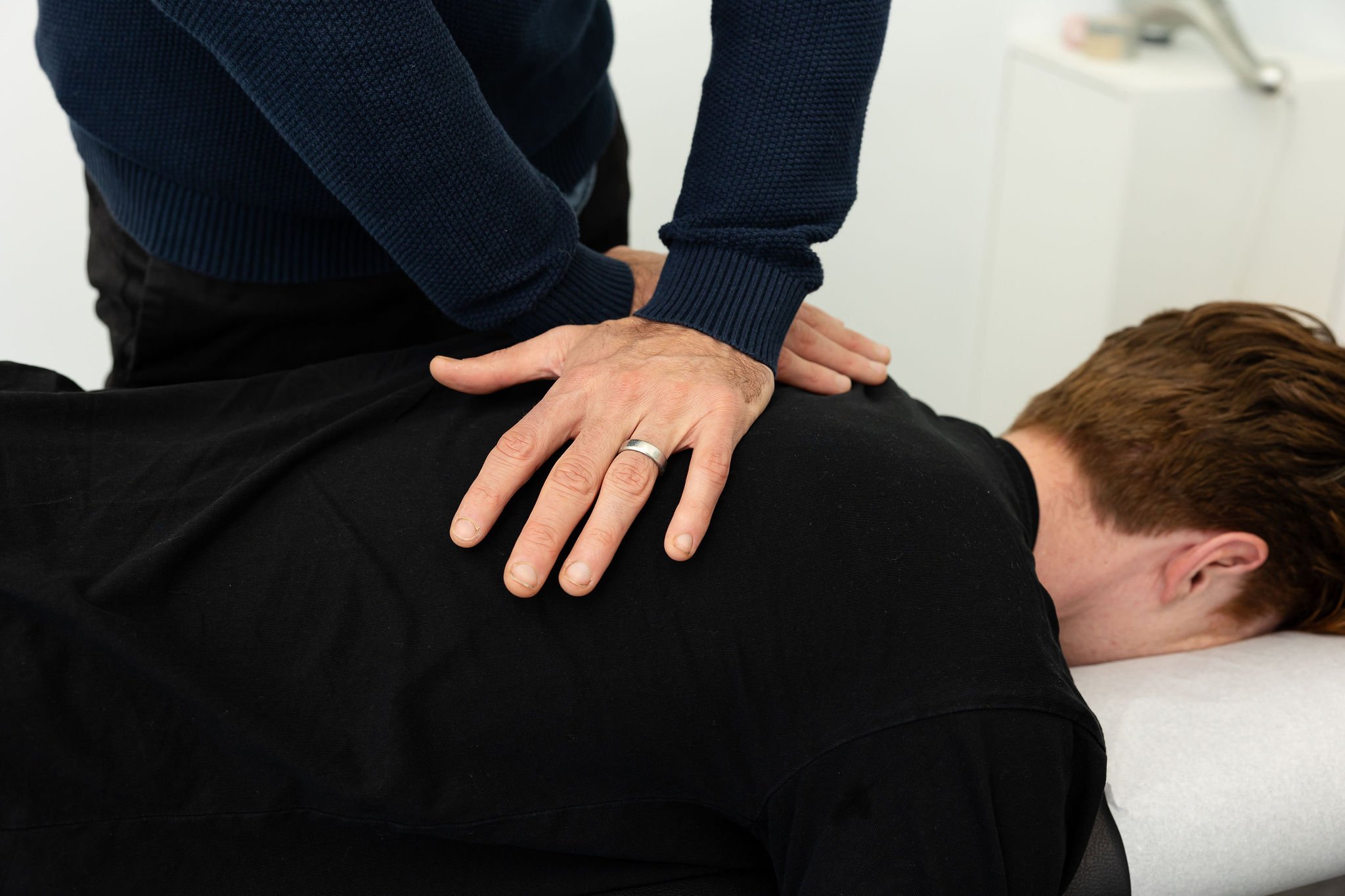
Adjustments. Gentle, specific adjustments free up joints in your neck and upper back that aren't moving properly. This is usually where the first relief comes from.
Neck curve traction. You lie on a shaped support called a Denneroll, building up time gradually. It gently stretches the tight ligaments at the front of the neck and helps reshape the curve. You'll also use one at home.
Exercises and habits. Strengthening the deep neck muscles, breathing through your nose, and simple changes to how you sit, sleep and use your phone. This helps hold the new curve in place.
What to expect
Correcting a neck curve takes time. It took years to lose it, and it takes months to change it. Most people notice their pain easing well before the curve itself changes, so we track your progress with regular re-examinations and, only where it will change your care, follow-up X-rays. Your care is always based on your own assessment and goals, and you're free to ask questions or change course at any time.
Is neck curve correction right for me?
It may suit you if you have:
Neck pain or stiffness that keeps coming back
Regular headaches
A forward head posture or "tech neck"
Long hours at a desk or on your phone
A past car accident or neck injury
If we think another health professional should see you first, we'll tell you.
Written by Dr Charles Williams (Chiro), BSci (Chiro) and Bachelor of Chiropractic, Murdoch University.
Meet Your Revesby Chiropractors
Dr Charles Williams (Chiropractor) is here to help you on your health journey. Meet our team before you arrive at the practice.

SCHEDULE YOUR FIRST CONSULTATION TODAY AND START HEALING
Our friendly chiropractors are dedicated to helping you achieve your health and wellness goals. Simply book your first appointment online to get started.